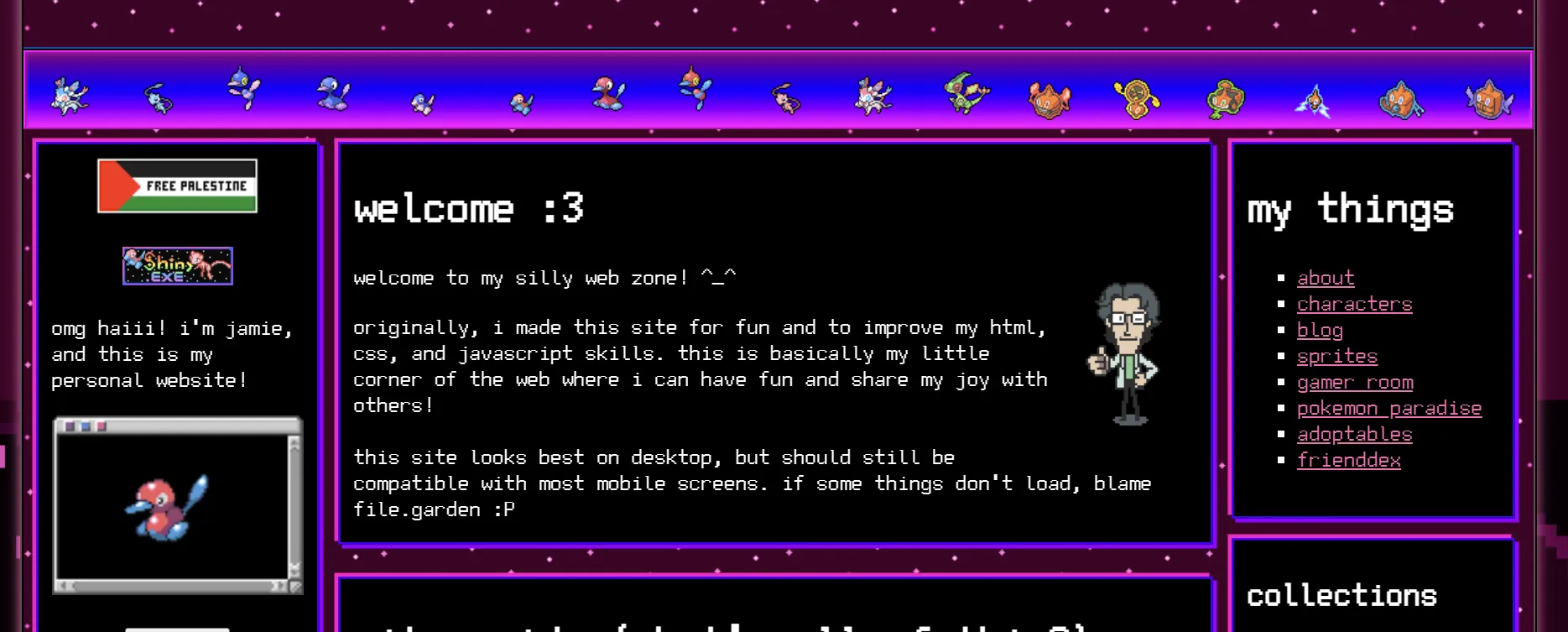
While revamping my website, I went looking for blog ideas. Simple enough, or so I thought.
Turns out, finding real personal blogs is not that easy anymore.
I spent a good amount of time on Google and kept running into the same thing: sites selling something, or sites telling you how to blog. But I didn’t want that. I wanted actual blogs. Real people. Real thoughts.
Not big platforms. Not polished content. Just people.
What I was really looking for was that early 2000s Internet, when browsing was fun. You could land on a random site full of colours, weird layouts, and a bunch of links that took you somewhere unexpected.
Back when people built websites because they wanted to, not because they were trying to monetise everything.
It even made me think about Flash websites. They were clunky and sometimes annoying, but also part of the experience. And yes, Internet Explorer 6 and the panic when it became a security nightmare.
So I tried the obvious thing and went to Google.
And it failed me.
The Internet doesn’t work the same way anymore. We used to have backlinks and webrings, which were real ways to discover things. Now it is algorithms, rankings, and SEO. If you are not big or not paying, you are buried.
So where did everything go?
Some of it is still out there, you just don’t stumble across it anymore. Other parts are gone because of time, neglect, or changing technology.
But a big part of it was swallowed by social media.
Over time, personal websites were slowly pulled into platforms. Instead of owning your own space, you post on someone else’s. Facebook pages replaced personal sites. Instagram replaced photo blogs. Twitter replaced short-form writing. Everything became centralised.
From MySpace to Facebook, Instagram, and TikTok, everything shifted. The Internet became something you scroll, not something you explore.
Today it is mostly social media, shopping, streaming, and business sites. Personal websites are rare.
I even remembered how we used to get CDs with magazines like PC Format, filled with links to cool sites. That was discovery.
Now it is just search results.
After getting nowhere, I tried something different and asked AI.
Yes, I used AI to find the old Internet. That is the irony.
And it actually worked.
I discovered things like the “Small Web” and the “Indie Web.” There is even a term called the “dead internet,” which honestly feels accurate.
Here is what I found:
- Neocities: a successor to GeoCities, a place where people still handcode their sites into HTML/CSS. High customization, quirky layouts, and zero ads. You’ll find everything from technical archives to personal diaries.
- Bear Blog Bear Blog is the antithesis of modern, bloated websites. It is a privacy-first, text-only blogging platform. There are no trackers, no scripts, and no “buy me a coffee” buttons by default. Although the blogs are a blog a day mostly so there is many many but very short blogs. The blogs does link to some interesting personal websites, so it worked for me.
- Webrings: Remember webrings? They are back. Small site owners link to each other in a circle, and it’s one of the most authentic ways to discover “people” rather than “brands.
- Hotline Webring A curated collection of personal sites and “digital gardens.”
- Low-tech Webring Sites focused on efficiency and simplicity.
- The 1mb Club A directory of websites that are less than 1MB in total size. These are almost exclusively personal passion projects.
- Search Engines for Humans. Google is currently terrible for finding personal blogs because they don’t “rank” well. Use these instead:
- Marginalia Search A search engine specifically designed to find non-commercial, text-heavy, “old-school” websites. It favors independent domains over big platforms.
- Kagi Small Web A curated feed of blog posts from the independent web.
- IndieWeb.org While more technical, their wiki lists hundreds of people who host their own content and follow the “own your data” philosophy.
- Blogroll.org A massive directory of active personal blogs categorized by interest.
It is not exactly the same as it used to be, but it is enough to bring that feeling back.
And that is the thing. The Internet is not completely gone, it is just hidden.
You just have to dig a bit harder now.
Em Reed’s Personal Website
candle’s website
The Big List of Personal Websites
Neocities
Jamie’s