More than just a cartoon
There are some stories you simply enjoy for a while and then move on from.
And then there are the stories that quietly become part of you.
For me, Robotech was one of those stories. One of the earliest forms of Japanese Anime that was made available for western people in the English language.
Even now, decades later, certain scenes, songs, or images from the series can still trigger something emotional in me almost instantly. Not just nostalgia, but something deeper. A strange mixture of excitement, longing, melancholy, admiration, and sadness. It is difficult to explain to someone who did not grow up with it during the right time in life.
Because Robotech was never really just about giant robots.
It was about becoming someone.
The Dream of Machines and Space
As a child, I was already obsessed with machines and technology. I loved robots. Electronics fascinated me. Mechanical things fascinated me. I wanted to understand how things worked. But more than that, I had that classic childhood dream that many boys of that era carried deep inside them: the dream that one day I would go into space and fight battles in a spaceship.
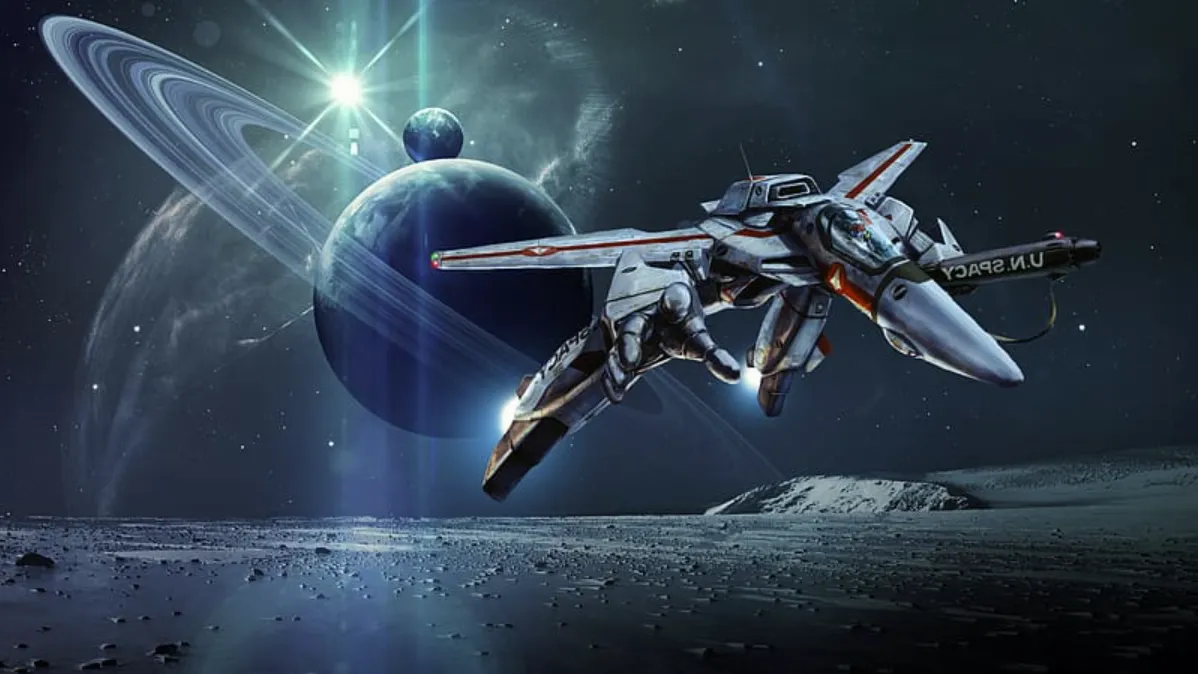
And then along came the VF-1 Valkyrie.
Not just a robot, but a machine that felt believable. A military aircraft that transformed depending on combat needs. Fighter mode for speed. GERWALK mode for hovering attack. Battroid mode for close combat. Even as a child, it felt mechanically logical in a way that other cartoons never did.
The brilliance of Macross (the original foundation beneath Robotech) was that the machines did not feel magical. They felt engineered.
For a technically minded child, that meant a lot.
The pilots were not superheroes with supernatural powers. They were ordinary people becoming extraordinary through skill, courage, training, and technology. That creates a very different kind of identification. You do not dream of becoming a god. You dream of becoming competent.
Looking back now, I can see how deeply that connected with the kind of person I eventually became in real life: someone drawn toward engineering, automation, electronics, systems, problem-solving, and technology.
The Love Triangle That Felt Real
But the machines alone are not why the series stayed with me.
The real core of Robotech was always emotional and human.
At the exact period when I was watching the series, I found myself emotionally caught between two girls.
One was realistic and grounded. The kind of person who represented stability and emotional maturity. Looking back now, she reminds me strongly of Lisa Hayes (Misa Hayase) as many of us knew her.
The other was different.
She was my first great romantic ideal. A long-distance relationship that lived more in imagination, hope, and emotional intensity than in practical reality. In many ways, she resembled Lynn Minmay. Not literally, of course, but emotionally. She represented longing, fantasy, youth, beauty, and the painful emotional pull of wanting something that always seemed just out of reach.
And that is one of the reasons the love triangle in Robotech worked so incredibly well.
It was a drama that reflected a very real human conflict: the tension between fantasy and stability, between longing and partnership, between idealised love and real companionship.
As a child or teenager, you do not fully understand this consciously. But emotionally, you feel it.
That emotional realism gave the series enormous power.
War, Collapse, and Survival
Then there was the war itself.
Unlike many cartoons of that era, Robotech treated war as something devastating. Cities were destroyed. People died. Humanity suffered. Civilisation itself felt fragile. The show carried a strange melancholy underneath all the excitement.
And strangely enough, that was part of what attracted me so strongly to it.
Even today, I remain deeply fascinated by stories about societal collapse, apocalyptic events, survival, and the rebuilding of civilisation. I think part of the reason is because apocalypse stories strip away superficiality. In those worlds, competence matters. Courage matters. Leadership matters. Technical skill matters. People become defined by what they can actually do under pressure.
In normal life, much of society feels buried beneath noise, politics, routines, and trivial concerns. People tend to be more pretentious.
But in apocalypse stories, reality becomes brutally simple.
Can you survive? Can you protect others? Can you adapt? Can you rebuild?
Robotech captured that feeling perfectly.
Music, Humanity, and Hope
Humanity was not merely fighting aliens. It was fighting extinction itself while trying to preserve culture, music, love, and humanity in the middle of destruction.
That is another thing the series understood brilliantly: civilisation is not only buildings and weapons. It is music. Emotion. Relationships. Memory. Human connection.
The idea that songs and culture could affect the enemy was one of the most unusual and beautiful ideas in science fiction at the time. It made the series feel strangely hopeful despite all its tragedy.
Why it Still Affects Me Today
And maybe that combination is exactly why it left such a permanent mark on so many people of my generation.
It gave us:
- giant transforming fighters
- space battles
- alien invasions
- heroism
- romance
- tragedy
- loss
- music
- apocalypse
- survival
- and hope
all at the same time.
Most stories only manage one or two of those things properly.
Robotech somehow managed all of them together.
Even its imperfections became part of its identity. The rough animation. The stitched-together storytelling. The strange pacing at times. None of it mattered because underneath it all was sincerity. The show believed in its own world completely, and so did we.
And perhaps that is why it still affects me emotionally today.
Robotech reminds me of:
- the child who dreamed of space warfare,
- the teenager struggling with first love,
- the fascination with technology,
- the longing for meaning,
- the attraction to survival and rebuilding,
- and the belief that ordinary people could become extraordinary under pressure,
- and maybe perhaps that my life is still ahead of me.
Some stories entertain us.
Others quietly leaves a mark inside of us.
Looking Back Now
Looking back now, I think Robotech resonated so deeply because it combined an unusually powerful mixture of ideas and emotions:
- human characters caught inside an overwhelming war,
- mechanically believable transforming fighters,
- real consequences and loss,
- a painfully realistic love triangle,
- music and culture used as forces of change,
- a balance between hope and tragedy,
- emotionally charged atmosphere and soundtrack,
- imperfections that somehow added character,
- and storytelling that respected its audience enough to handle serious themes.
Most stories manage one or two of these elements well.
Robotech somehow managed nearly all of them at once.
And for many of us who encountered it at exactly the right age, it became more than entertainment. It became part of our emotional and imaginative landscape.
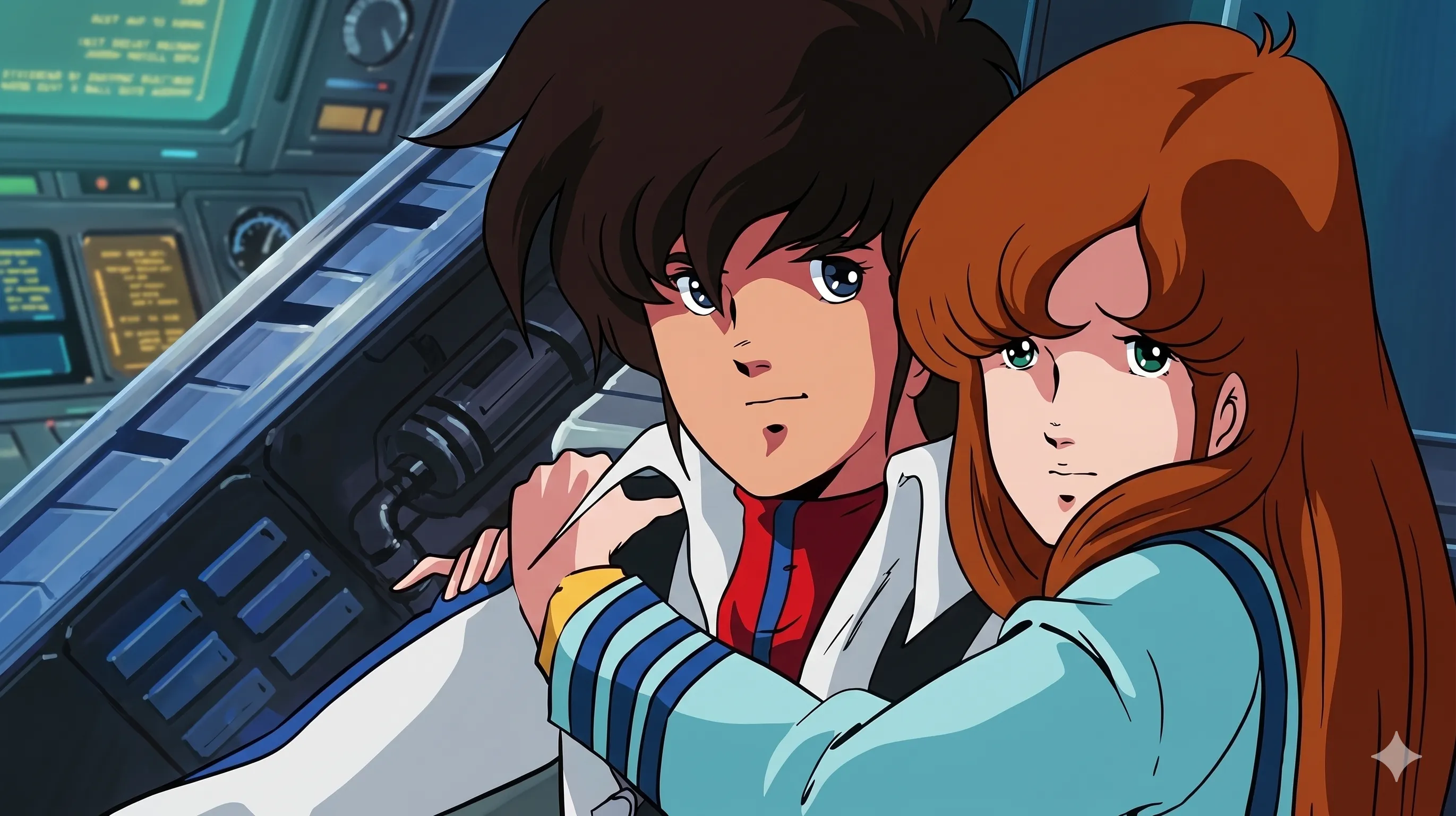
Some of the main characters in Robotech (Macross):
The Macross Saga (First Generation)
- Rick Hunter
- Lisa Hayes
- Lynn Minmei
- Roy Focker
- Claudia Grant
- Max Sterling
- Miriya Parina Sterling
- Captain Henry Gloval
- Maximilian Jenius
- Exedore
- Khyron
The Robotech Masters (Second Generation)
- Dana Sterling
- Bowie Grant
- Zor Prime
The new Generation (Third Generation)
- Scott Bernard
- Rand
- Rook Bartley
- Lancer
- The Regress
